Skill or Strategy? The Hidden Forces Deciding Which Bottle Flippers Go Viral
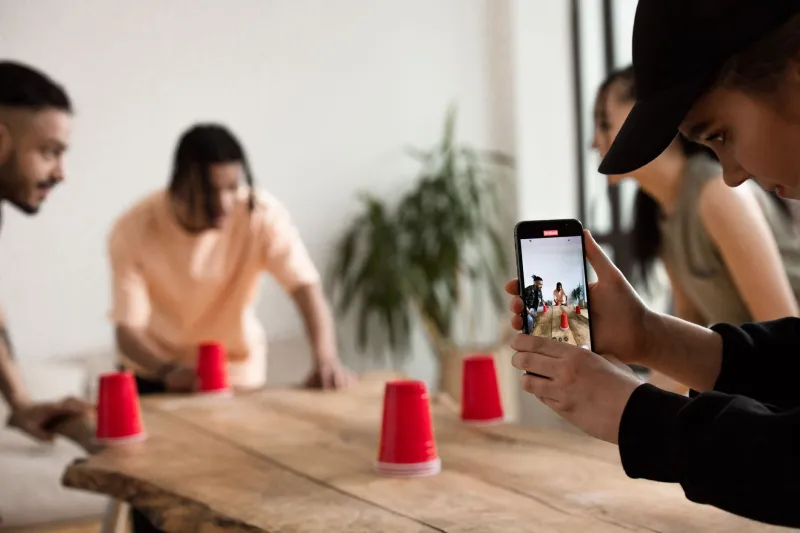
There's a moment every serious bottle flipper knows well. You nail a trick you've been practicing for weeks — maybe a double rotation off a stair railing, maybe a blind flip that lands perfectly on a moving skateboard — and you post the video feeling like this is the one. Then you refresh. And refresh again. Forty-eight hours later, you've got 200 views and a comment from your cousin.
Meanwhile, somewhere in Ohio, a 14-year-old posts a shaky vertical video of a basic half-liter flip onto a lunch table, and by the next morning it has 3.4 million views.
So what's actually going on here?
The Algorithm Isn't Watching Your Technique
Here's the hard truth that a lot of skilled flippers don't want to hear: TikTok and Instagram Reels don't care how clean your landing is. The algorithm isn't judging your wrist snap or your bottle fill percentage. It's tracking one thing above almost everything else — how people behave when they watch your video.
"The platforms are optimizing for engagement signals, not content quality," explains Marcus Webb, a digital media researcher based in Austin who studies short-form video distribution. "Watch time, replays, shares, comments — those are the inputs. A perfectly executed trick that people scroll past in two seconds is algorithmically worthless compared to a messier clip that makes someone watch three times trying to figure out if it was real."
That replay factor is huge in bottle flipping content specifically. Trick shots that feel almost impossible — the kind where viewers aren't sure whether to believe their eyes — tend to get looped over and over. And every loop is a signal to the platform that the content is worth pushing further.
Timing, Hashtags, and the Posting Game
Beyond the content itself, a growing number of creators are treating their posting schedule like a science experiment. Several flippers in the FlipBottle community shared that they've spent months testing different upload windows, hashtag combinations, and caption styles to see what actually moves the needle.
Jordan Tate, a 19-year-old from Atlanta with around 280,000 TikTok followers, broke down his approach with surprising detail. "I post between 6 and 8 PM on weekdays, never on Sundays, and I rotate between three or four hashtag sets so I'm not getting flagged for spam patterns. I also keep my captions short and use a question when I can — anything that gets people into the comments."
Jordan's most viral clip, which pulled in over 8 million views last spring, wasn't his most technically impressive flip. It was a relatively simple shot where the bottle landed on the edge of a moving ceiling fan blade and somehow stayed upright. "Honestly I've done harder stuff," he admits. "But that one had the 'wait, is that real?' energy. People were arguing in the comments for days."
That controversy-adjacent engagement is something algorithm researchers point to constantly. Comments — especially disagreements — send strong positive signals to both TikTok and Instagram's recommendation systems. A flip that sparks debate about whether it was faked will almost always outperform a clean, undeniable trick that people simply double-tap and keep scrolling.
The Discovery Problem for New Creators
For flippers just starting out, the system can feel brutally unfair. Established accounts with large followings already have a built-in engagement base that helps new posts gain early traction — which the algorithm interprets as a signal to push the content wider. Smaller creators don't have that runway.
"It's a compounding advantage," says Webb. "The bigger you already are, the easier it is to go viral again. The algorithm is, in some ways, just amplifying existing popularity rather than discovering new talent."
Some newer flippers have tried to game around this by leaning into trending audio tracks — a tactic that both TikTok and Instagram explicitly reward through their discovery features. Pairing a bottle flip clip with whatever sound is currently surging on the platform can inject a video into a completely different content stream, reaching audiences who would never search for flipping content on their own.
Sophia Reyes, a 17-year-old flipper from Phoenix who runs a smaller account she's been building for about eight months, says audio selection changed everything for her. "I started syncing my flips to trending sounds instead of just posting raw clips, and my reach basically doubled overnight. It felt a little weird at first because it's not really about the flip anymore, it's about the package. But that's just how it works."
Is Authentic Skill Getting Buried?
The obvious concern in all of this is that the most technically gifted flippers aren't necessarily the ones breaking through. Someone who understands content packaging, posting windows, and algorithmic hooks may consistently outperform a more skilled competitor who's just posting raw footage and hoping for the best.
Within the competitive bottle flipping community, that tension is real. Several members of organized flip crews told us they feel like the platforms are rewarding entertainment value over actual technique — and that it's starting to affect how people train.
"I've seen kids deliberately make their flips look more unstable so there's more suspense," says one crew member from a Chicago-based group who asked to stay anonymous. "Like, they'll use a bottle that's harder to control just because the wobble looks more dramatic on camera. That's not skill development, that's content optimization."
It's a genuine cultural split — the competitive side of bottle flipping, where precision and consistency are everything, versus the viral content side, where drama and shareability reign.
What This Means If You're Trying to Break Through
If you're an aspiring flipper trying to build a following, the honest advice from people who've actually done it seems to be: don't ignore the algorithm, but don't let it hollow out your content either.
The creators with staying power tend to be the ones who find a way to do both — developing real skill that gives them an endless supply of genuinely impressive material, while also being thoughtful about how they present it. The best flip in the world, posted at the wrong time with no hooks, can disappear. A mediocre flip packaged brilliantly might pop once, but it rarely builds a loyal audience.
"People can tell when someone actually has it," Jordan Tate says. "The algorithm might give you a moment, but the skill is what makes people stick around and come back."
For now, going viral in the bottle flipping world is part talent, part timing, and a whole lot of understanding the invisible machinery running underneath the feed. The platforms aren't going to tell you how any of it works. But the community is figuring it out — one flip at a time.