Small Towns, Big Flips: How Local Bottle Flipping Crews Are Landing Real Sponsorships
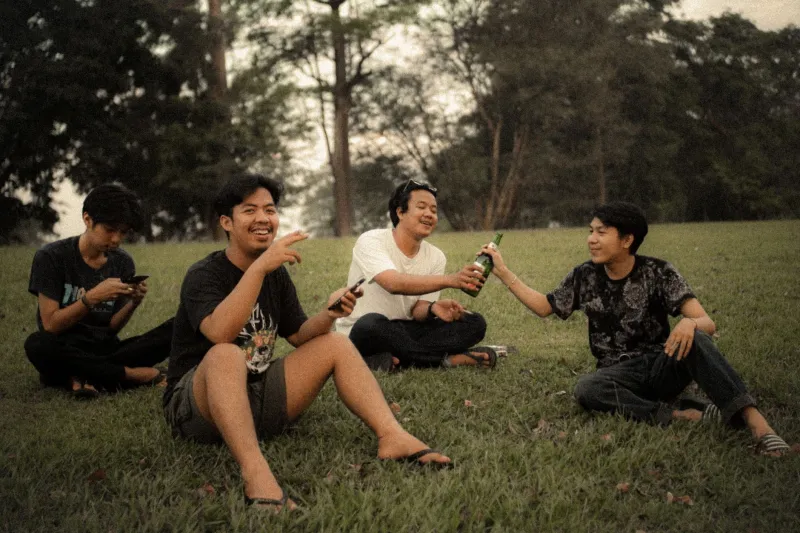
Everybody loves a good underdog story. And in the bottle flipping world, the underdogs right now aren't the lone bedroom flipper grinding for algorithm love — they're the regional crews, the local clubs, the Discord servers full of kids from the same zip code who started meeting up at a park every Saturday and somehow ended up on a brand's radar.
It's happening more than you'd think. Across the country, small but organized bottle flipping communities are catching the attention of sponsors in ways that individual viral moments just can't replicate. The reason? Consistency, community, and a kind of authentic energy that no amount of solo content farming can fake.
The Scene Nobody Was Watching
Take Midwest Flip Collective, a loose organization that started in Columbus, Ohio, back when a few high schoolers started hosting informal competitions in a church parking lot on Sunday afternoons. What began as maybe eight kids showing up with half-filled Poland Spring bottles has grown into a regional network spanning four cities, with over 200 active members across its social channels.
"We never set out to build a brand," says Marcus T., one of the collective's founding organizers. "We just wanted somewhere to compete that wasn't online. Like, face to face, you know? Real stakes."
That face-to-face element turned out to be the secret weapon. When a regional hydration brand started looking for authentic youth-oriented content partnerships last spring, they didn't go hunting for the kid with the most TikTok followers. They found Midwest Flip Collective through a mutual contact, saw the genuine community engagement, and reached out directly.
"They told us they were tired of paying for posts that felt fake," Marcus says. "They wanted something that already had roots."
Why Brands Are Paying Attention to Local Scenes
This isn't just one story. Similar dynamics are playing out in places like Tucson, Austin, and outside Charlotte. The common thread is that organized local communities offer something the algorithm can't manufacture: trust.
When a crew has been meeting up for months, running their own competitions, posting consistent content, and building real friendships, the audience can feel that. Followers who found a group through a local hashtag or a friend's share tend to be far more engaged than the ones who stumbled across a single viral trick shot.
For brands trying to reach Gen Z and younger millennials, that engagement rate matters enormously. A bottle flipping collective with 15,000 highly active followers in a specific metro area can be more valuable for a regional product launch than a solo creator with ten times the followers but a passive, scattered audience.
Jordan K., who runs the Southwest Flip League out of Tucson, puts it bluntly: "Sponsors started asking us about our demographics. Like, they were treating us like a media company. That was wild to me. We're just kids who like flipping bottles."
Jordan's group recently finalized a deal with a local sporting goods retailer for event sponsorship and product placement in their competition recap videos. It's not a life-changing sum, but it's real money — and more importantly, it's a template.
The Pipeline Is More Real Than People Realize
What's emerging from these regional scenes isn't just the occasional one-off deal. It's starting to look like an actual pipeline — a structured path from local participation to visible content creator to legitimate brand partner.
Here's roughly how it tends to work: A flipper gets involved with a local crew, starts appearing in group content, builds a personal following alongside the collective's audience, and then either spins off into solo content with the community's support or becomes an official ambassador for the group's brand partnerships.
Alex R., a 19-year-old from outside Charlotte, followed almost exactly that path. She started showing up to a local meetup group called Carolina Flip Club about eighteen months ago, mostly just to hang out and compete. Within six months, she was one of their most-featured athletes. Within a year, she had her own modest but growing solo presence. Now she's co-managing the club's social accounts and just wrapped up her first individual brand collaboration — a water bottle company that found her through the club's content.
"The club was like a launching pad," Alex says. "I don't think I would've gotten noticed if I was just posting on my own from the start. Being part of something bigger got me seen."
The Challenges of Going Grassroots
It's not all smooth landings, though. Building and maintaining a regional community takes real work, and a lot of it is invisible — scheduling meetups, managing group chats, mediating drama, keeping the energy up when attendance dips in winter.
There's also the money question. Most of these groups are operating on zero budget, which means organizers are essentially volunteering their time to build something that may eventually generate revenue for others. The question of how to fairly distribute sponsorship income across a collective is one that many groups are still figuring out.
"We had a conversation about it early on," says Marcus from Midwest Flip Collective. "Like, if a brand pays us, who does that money go to? We ended up putting most of it back into the events — better equipment, venue costs, prizes. But it's a real conversation every group needs to have."
There's also the risk of growth outpacing the culture. Some organizers worry that chasing sponsorships too aggressively can change the vibe of what made the community special in the first place.
"The authenticity is the whole thing," Jordan says. "The second it starts feeling like a job or a commercial, people leave. You have to keep the community first and let the business stuff follow naturally."
What This Means for the Future of Bottle Flipping
The rise of these regional communities points to something genuinely interesting happening in competitive bottle flipping's cultural arc. The sport — if we're calling it that — is maturing past the era of the random viral moment and moving toward something with more infrastructure.
Local scenes create depth. They create rivals, friendships, recurring storylines, and the kind of ongoing narrative that keeps audiences coming back. That's the stuff that sustains a community long after a single trick shot video has scrolled off everyone's feed.
For brands, that depth represents a more stable investment. For creators, it represents a more sustainable path. And for the sport itself, it's probably the healthiest thing that could be happening right now.
So if you're out there grinding solo, wondering why the sponsorships aren't coming — maybe it's worth looking around your city. There might already be a crew forming. Or maybe it's time to start one yourself.
Flip it local. Build it real. The leaderboard isn't just online anymore.