Serious Flippers Are Spending Hundreds on Custom Bottles — But Does the Gear Actually Matter?
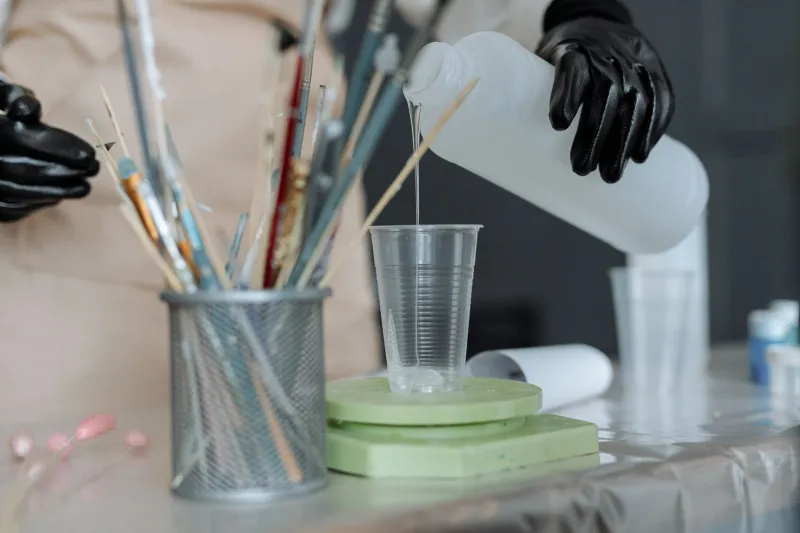
Somewhere in a garage workshop in Austin, Texas, a guy named Marcus is hunched over a workbench, carefully injecting a measured slurry of resin and tungsten powder into the base of a custom-blown polycarbonate bottle. He'll spend the next three hours getting the weight distribution exactly right. When he's done, that bottle will retail for $340 — and he's got a six-week waitlist.
This is bottle flipping in 2024. And it's gotten a little wild.
What started as a cafeteria dare — remember that kid in the viral video who just casually nailed a flip during a talent show and broke the internet? — has quietly evolved into a hobby with a legitimate gear economy attached to it. Competitors who once grabbed whatever half-full Dasani was nearby are now obsessing over fluid dynamics, rotational inertia, and vessel geometry the way cyclists obsess over carbon fiber frames. The question everyone in the community keeps circling back to: is any of this actually worth it?
The Rise of the Boutique Bottle Builder
The boutique bottle scene is small but surprisingly organized. Most of it lives on Discord servers and a handful of dedicated subreddits, where custom builders advertise their work through short flip demo clips and detailed spec sheets. Prices range from about $80 for a modified off-the-shelf bottle to well north of $500 for fully bespoke builds made to a competitor's exact specifications.
Builders like Marcus — who goes by "FluidForm" online and declined to share his last name — describe their work in almost artisanal terms. "I'm not just filling a bottle," he told us over a voice call. "I'm tuning an instrument. Every gram matters. The center of gravity has to sit at the right point for a clean rotation, and that point is different depending on how a person flips — their release angle, their wrist snap, how high they're throwing."
That kind of customization is exactly what's driving demand from top-tier competitors. Several flippers who've placed in regional tournaments over the past year told us they'd transitioned to custom gear after hitting a ceiling with stock bottles. The general consensus: once you've dialed in your technique to a certain level, inconsistency in your equipment becomes the loudest variable left.
What the Engineering Actually Looks Like
So what separates a $400 custom bottle from the $2 one at a gas station? Quite a bit, technically speaking.
Most serious modifications focus on three areas: base weighting, fluid viscosity, and vessel rigidity. Base weighting — adding denser material to the bottom portion of the bottle — helps the bottle "stick" on landing by lowering the center of mass and reducing the tendency to tip over after initial contact. Some builders use tungsten-infused epoxy. Others experiment with steel shot suspended in silicone gel. A few have started using 3D-printed internal armatures to hold weighted elements in precise positions.
Fluid viscosity is another lever. Straight water is fast and unpredictable. Some custom bottles use a glycerin-water mixture that slows the internal fluid movement during rotation, producing a smoother, more stable spin. Think of it like the difference between shaking a snow globe filled with water versus one filled with that thick, syrupy solution — the motion is more controlled.
Vessel rigidity matters more than most people expect. A bottle that flexes slightly on landing absorbs impact differently than a stiff one, and that can be the difference between a clean stick and a wobble-out. High-end builds often use medical-grade polycarbonate or even machined aluminum bodies — yes, metal bottles — for a completely consistent structural response.
The Skeptics Have a Point Too
Not everyone in the community is buying in. A vocal contingent of flippers — many of them genuinely elite competitors — think the premium gear conversation is getting out of hand.
"I've been to tournaments where kids are pulling out these fancy custom bottles and I'm using a $1.50 Smartwater I bought at the venue," says Jordan, a 19-year-old from Columbus, Ohio, who asked us not to use his last name. "I've beaten most of them. The bottle doesn't flip itself."
That perspective gets some backup from the physics side of things. The performance window between a well-modified bottle and a properly filled standard bottle is real but narrow. Most estimates from hobbyist engineers who've run controlled tests put the improvement in landing consistency somewhere between 8 and 15 percent under ideal conditions — meaningful at the highest competitive levels, but not a magic solution for someone still working on their release mechanics.
There's also the placebo angle, which is hard to dismiss. Sports psychology research consistently shows that athletes who believe in their equipment perform better with it, regardless of whether the equipment actually does anything measurable. A $400 bottle might make a flipper more confident, more deliberate, more focused — and those mental factors could account for more of the performance gain than any engineering tweak.
The Community Is Watching the Money Closely
Beyond the performance debate, there's a values conversation happening inside the flipping community that's worth paying attention to. Bottle flipping's whole appeal — its origin story, basically — is that it's democratic. You don't need expensive gear. You don't need a coach or a facility or a membership. You just need a bottle and a surface.
As custom gear prices climb and waitlists grow, some longtime community members worry about what that means for accessibility. If top-level competition starts requiring a $500 investment just to stay technically competitive, the barrier to entry shifts in a way that cuts against everything that made the scene feel special in the first place.
Organizers of some regional tournaments have already started implementing "stock bottle" divisions specifically to preserve that open, anyone-can-play energy. It's a smart move — and it signals that the community is at least aware of the tension.
So Should You Buy In?
Honest answer: it depends entirely on where you're at.
If you're still developing your technique, spending hundreds on custom gear is probably the least efficient use of your money. Work on your release. Film yourself. Study your rotation. The fundamentals matter more than the vessel at that stage, full stop.
But if you're genuinely competing at a high level, you've plateaued on technique, and you're looking for every edge available? The custom gear conversation becomes a lot more legitimate. The improvements are real, even if they're incremental. And in a sport where margins are razor-thin, incremental matters.
Either way, the boutique bottle market isn't going anywhere. If anything, it's just getting started. Marcus told us he's already got three builders asking about apprenticeships and a waiting list that stretches into next spring.
"People thought I was crazy when I started," he said. "Now I can't keep up with orders."
Somehow that feels exactly right for a sport that started with a kid and a half-full water bottle in a school gymnasium.