Wrists, Shoulders, and Warning Signs: What Competitive Flippers Need to Hear From Sports Doctors
You've landed thousands of flips. Your wrist snap is dialed in. Your shoulder rotation is smooth. Everything feels fine — until one morning you wake up and reaching for your water bottle sends a sharp twinge straight through your forearm. Sound familiar? If you're grinding sessions daily, training for leaderboard runs, or chasing viral content, your body is keeping a tab you haven't checked yet.
The competitive bottle flipping scene has grown fast, and the physical demands on serious flippers have grown right along with it. We reached out to sports medicine professionals and orthopedic specialists across the country who've started seeing flippers — yes, actual bottle flippers — in their waiting rooms. What they told us is worth paying attention to before your next session.
The Repetition Problem Nobody Talks About
Here's the thing about bottle flipping: a single flip looks almost effortless. The motion is small, controlled, and quick. But Dr. Marcus Webb, a sports medicine physician based in Chicago who works with youth athletes, points out that perception is exactly what gets flippers into trouble.
"The injury profile we see from repetitive small-motion activities is actually more insidious than acute trauma injuries," Dr. Webb explains. "Because nothing hurts dramatically in the beginning, people keep going. By the time they feel real pain, there's already accumulated damage."
Flippers doing 200, 300, or even 500 attempts in a single session — which is completely normal in competitive training — are loading the same tendons, ligaments, and joint surfaces over and over again. The wrist flexors and extensors take the brunt of the snap motion. The shoulder's rotator cuff muscles engage subtly on every throw. The elbow's medial collateral ligament gets stressed when flippers use heavy bottles with aggressive spin.
The cumulative effect? Tendinitis. Repetitive strain injury. In more serious cases, early-stage tendinopathy that can take months to fully heal.
What's Actually Getting Hurt
Let's break down the specific injury patterns doctors are flagging.
Wrist Tendinitis and De Quervain's Tenosynovitis
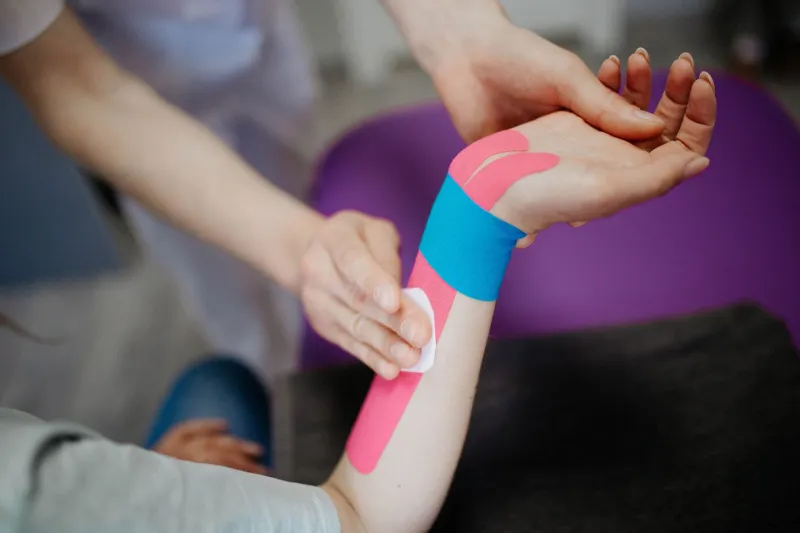
The snap at the point of release is the heart of every flip, and it's also the source of the most common complaint. De Quervain's tenosynovitis — inflammation of the tendons on the thumb side of the wrist — shows up when flippers use a grip-and-snap technique with high volume. Dr. Alicia Nguyen, an orthopedic specialist in Houston, says she's had three teenage patients in the last year with this diagnosis, all of them describing themselves as "serious" flippers.
"They all said the same thing: it started as mild soreness they ignored for weeks," she says. "By the time they came in, they had significant swelling and were losing grip strength."
Shoulder Impingement
Flippers who throw with a higher arc — especially those going for dramatic distance or height shots — are at risk for shoulder impingement syndrome. This happens when the rotator cuff tendons get repeatedly pinched between the bones of the shoulder during elevation. It's more common in flippers who don't warm up, use asymmetric throwing mechanics, or train heavily on one side without any cross-training.
Elbow Strain
Bottles filled to heavier levels create more resistance and require more forearm engagement. Flippers chasing that perfect mid-fill weight for stability are sometimes inadvertently putting their medial elbow tendons under stress patterns similar to what baseball pitchers experience — just at a lower intensity per rep, but with far more reps.
The Less Obvious Stuff: Posture and the Spine
Here's one nobody expects: back and neck issues. Flippers who spend hours hunched over phones reviewing footage, crouched on floors setting up trick shot angles, or repeatedly bending to retrieve bottles are developing postural problems that compound over time. Dr. Webb calls it "the filming crouch" — the habitual forward-lean position flippers adopt when setting up and reviewing shots.
"It's not the flipping itself causing the back problems," he clarifies. "It's everything around the flipping. The setup, the retrieval, the review loop. It adds up."
What the Top Competitors Do Differently
Here's where it gets useful. We asked around in the competitive community about what the most experienced, longest-active flippers do to stay healthy. A few patterns showed up consistently.
Structured warm-up routines. The flippers who've been competing for two or three years without serious injury almost universally mentioned warming up their wrists and shoulders before sessions. Simple wrist circles, resistance band shoulder activation, and finger stretches take less than five minutes and dramatically reduce cold-tissue strain.
Volume caps. Elite competitors often set hard limits on daily attempt counts during heavy training blocks. Rather than grinding until their arm gives out, they treat flip sessions like athletic training — structured sets, rest intervals, and session cutoffs.
Bilateral training. Some top flippers deliberately practice with their non-dominant hand periodically, not because they compete with it, but to balance out muscular development and reduce overuse asymmetry.
Ice and recovery. Post-session icing of the wrist and elbow — even when nothing hurts — is a habit several experienced competitors swear by. Think of it as maintenance, not treatment.
When to Actually See Someone
Dr. Nguyen's rule of thumb is straightforward: "If pain persists more than 48 hours after rest, or if you notice swelling, loss of grip strength, or tingling, stop training and get it looked at. Don't try to flip through it."
The worst outcomes she's seen come from flippers who delayed seeking care because the activity felt too casual to justify a doctor's visit. But competitive flipping is a real physical activity, and your body doesn't care what other people think of it — it just accumulates damage.
The Bottom Line
Bottle flipping is never going to be in the same injury-risk category as football or gymnastics. But the competitive scene has evolved to a point where serious practitioners are putting genuine physical stress on their bodies, often without any of the athletic support infrastructure that other sports take for granted.
You put time into perfecting your technique. You track your stats. You study your footage. Spend five minutes studying your body too — because the flippers who stay on the leaderboard longest are the ones still healthy enough to keep throwing.