Basement Laboratories and Backyard Rigs: Meet the Flippers Engineering Their Way to the Top
Most people think getting better at bottle flipping means throwing more flips. Marcus Delgado, a 17-year-old from outside Columbus, Ohio, disagrees. He thinks it means building a tensioned wire guide system out of PVC pipe, zip ties, and a broken camera tripod — and then running 200 controlled throws through it every Saturday morning.
"My dad thought I lost my mind," Marcus says, laughing. "But after two weeks of data, I shaved almost a full rotation off my average and my land rate went up like 30 percent. It's not crazy. It's just science."
This is the new frontier of competitive bottle flipping. While casual players are still eyeballing their wrist angle and hoping for the best, a growing underground of serious competitors are treating their garages and basements like actual research labs — measuring, testing, filming, and iterating with a rigor that would make a high school physics teacher proud.
The Rise of the Flipper-Engineer
It started, as most things in this community do, with frustration. Players who were already decent at flipping hit a ceiling and couldn't figure out why. Watching slow-motion videos online helped a little, but it wasn't enough. They needed data about their own throws — not someone else's.
So they started building.
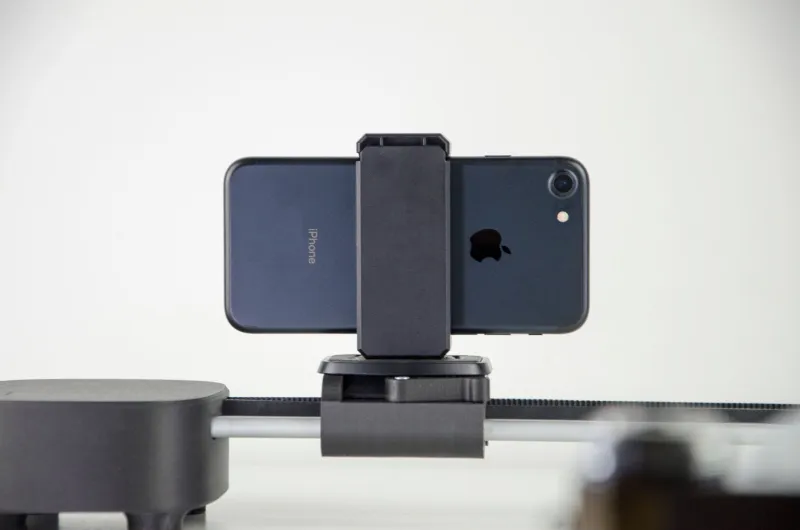
Jordan Tse, 20, a community college student in the Sacramento area, rigged up a slow-motion capture station using two old smartphones mounted on a wooden frame he built from scrap lumber. One camera shoots from the side, one from the front. He syncs the footage in a free video editor and analyzes each flip frame by frame.
"I'm looking at the release angle, how much wobble there is at the top of the arc, where the bottle is in its rotation when it hits the surface," Jordan explains. "Once you can actually see that stuff, you stop guessing. You start fixing real problems."
His setup cost him under $40 in materials. The time investment? He doesn't want to think about it.
What These Rigs Actually Look Like
No two basement labs are alike, but a few common components keep showing up across the community.
Slow-motion capture rigs are probably the most popular starting point. Newer budget smartphones can shoot at 240 frames per second — more than enough to catch the full arc and rotation of a flip. Flippers mount them at precise distances and heights using everything from LEGO Technic frames to welded metal brackets, then replay footage to track variables like spin rate and contact point on landing.
Rotation counters are a more DIY invention. Some flippers have rigged up simple sticker-and-marker systems on their bottles so they can track exactly how many rotations occur per throw. Others have gotten more elaborate — Jordan actually attached a lightweight reflective strip to a bottle and used a basic light sensor to count passes during the throw, logging results in a spreadsheet.
Surface testing boards let flippers experiment with how different landing surfaces affect success rates. Marcus built a modular platform with interchangeable tops — wood, rubber mat, tile, concrete board — so he could measure which surface his technique was most consistent on before heading into a competition.
Throw guides are the most mechanical of the bunch. These are physical structures — usually PVC or wooden frames — that constrain the hand path during a throw, forcing a consistent release motion. Think of it like a batting cage for your wrist. You throw through the guide until the motion becomes automatic, then remove it and see if the muscle memory holds.
The Data Obsession Is Real
What separates these builders from casual players isn't just the hardware — it's what they do with what they learn.
Alexa Ruiz, 18, from the Tampa area, keeps a flip journal. Not just notes — actual structured logs with throw number, fill level of the bottle, estimated release angle, surface type, and outcome. She's been doing it for eight months and has over 3,000 entries.
"People think I'm weird but I went from landing maybe one in five to landing close to one in two on my standard throw," she says. "I don't think that's a coincidence."
She's also started experimenting with water temperature, after noticing that colder water shifted the center of mass slightly during a flip — at least, that's her hypothesis. She hasn't confirmed it yet. But she's testing it.
This is the mindset that defines the flipper-engineer: nothing is too small to investigate. Fill level, cap tightness, ambient temperature, grip position — it all goes under the microscope.
Why This Matters for Competitive Flipping
All of this DIY science isn't just a hobby flex. It's changing competitive outcomes.
At local and regional flip competitions, players who've put in this kind of analytical work are increasingly outperforming those who've simply practiced longer. Consistency is rewarded in competition formats, and consistency is exactly what systematic training produces.
There's also a community knowledge-sharing element emerging. Flippers like Marcus and Jordan have started posting their rigs and findings in Discord servers and subreddits, creating a loose but growing knowledge base. Think of it as open-source flip science.
"I posted my rotation counter setup and within a week three other people had built their own versions," Jordan says. "One guy in Arizona improved mine, added a better sensor. That's how it should work."
Getting Started Without Breaking the Bank
You don't need a fully equipped basement to start thinking like a flipper-engineer. Here's how to dip your toes in without spending much:
- Use your phone's slo-mo mode. Even 120fps reveals a lot. Prop it up against a stack of books and review your throws.
- Mark your bottle. A strip of colored tape lets you count rotations visually in playback.
- Log your throws. Even a simple notes app entry — surface, result, feel of the throw — builds useful patterns over time.
- Change one variable at a time. Adjust your fill level for a week, then your grip, then your release point. Don't change everything at once or you won't know what's working.
The goal isn't to turn bottle flipping into a chemistry lab. It's to stop leaving your improvement up to chance. The flippers who are winning right now aren't just talented — they're paying attention in ways most people aren't.
And yeah, some of them are doing it from a folding table next to a water heater in their parents' basement. But the leaderboard doesn't care where you trained.